
Advancing Pipe Cutting Safety & Efficiency in NSW Utility Infrastructure
Pipe replacement, maintenance, and emergency repairs within the NSW water and sewer network frequently occur under constrained and high-risk conditions. Operators are often required to cut ductile iron, reinforced concrete, or composite pipe within:
Narrow trenches
Confined service corridors
High-moisture or flooded environments
Live infrastructure zones with restricted ventilation
Under these conditions, traditional petrol-powered cut-off saws introduce several compounding risk factors: exhaust emissions within the trench, elevated vibration and fatigue from engine weight, higher acoustic exposure, and increased reactive forces during blade binding.
As safety frameworks within state water authorities continue to evolve toward stricter confined space and environmental standards, the suitability of combustion-driven cutting equipment is increasingly being scrutinised.
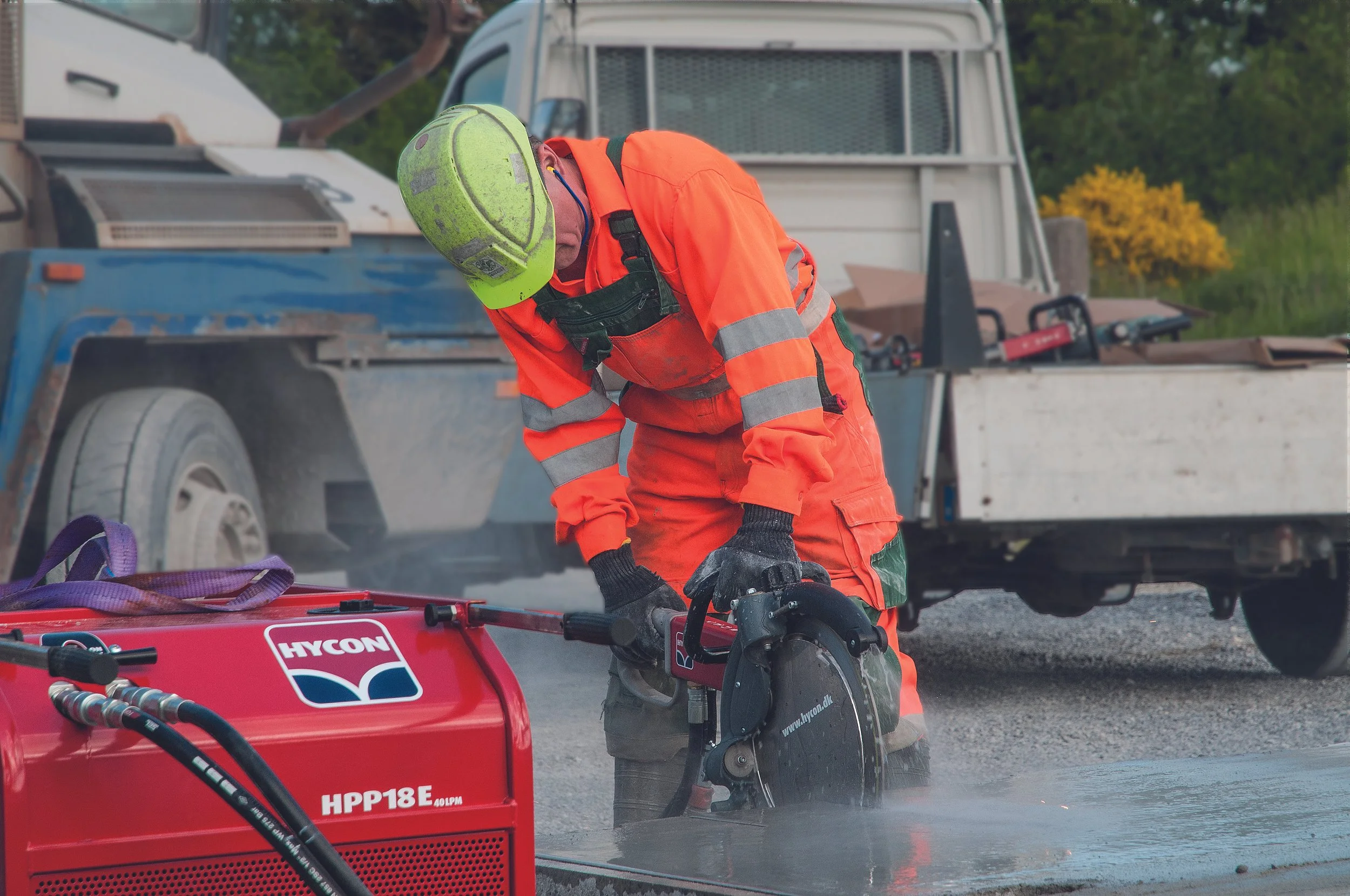
HYCON Australia is currently working alongside a major end user within the NSW state water network to progress the approval of hydraulic-powered cutting systems specifically the HYCON hydraulic ring saw and power pack platform — for use across utility-controlled sites.
Technical Overview: Hydraulic Power in Utility Applications
Hydraulic systems operate as closed-loop circuits powered by an external hydraulic power pack or excavator hydraulic supply.
From an engineering standpoint, this architecture separates the combustion source from the cutting interface. The implications are significant:
No exhaust gases generated at the point of cutting
Reduced heat signature within confined spaces
Lower operator exposure to airborne contaminants
Reduced acoustic intensity within the trench
The hydraulic power pack used in the HYCON system produces a sound power level of approximately 109 dB, compared to approximately 115 dB typical of petrol-powered cut-off saw engines.
In practical terms, this reduces peak acoustic energy at operator level and improves overall site compliance capability.
Hydraulic tools also provide one of the highest power-to-weight ratios among portable cutting systems, resulting in lighter handheld tools with reduced static load and improved handling characteristics.
The HYCON Hydraulic Ring Saw: Engineering Advantages
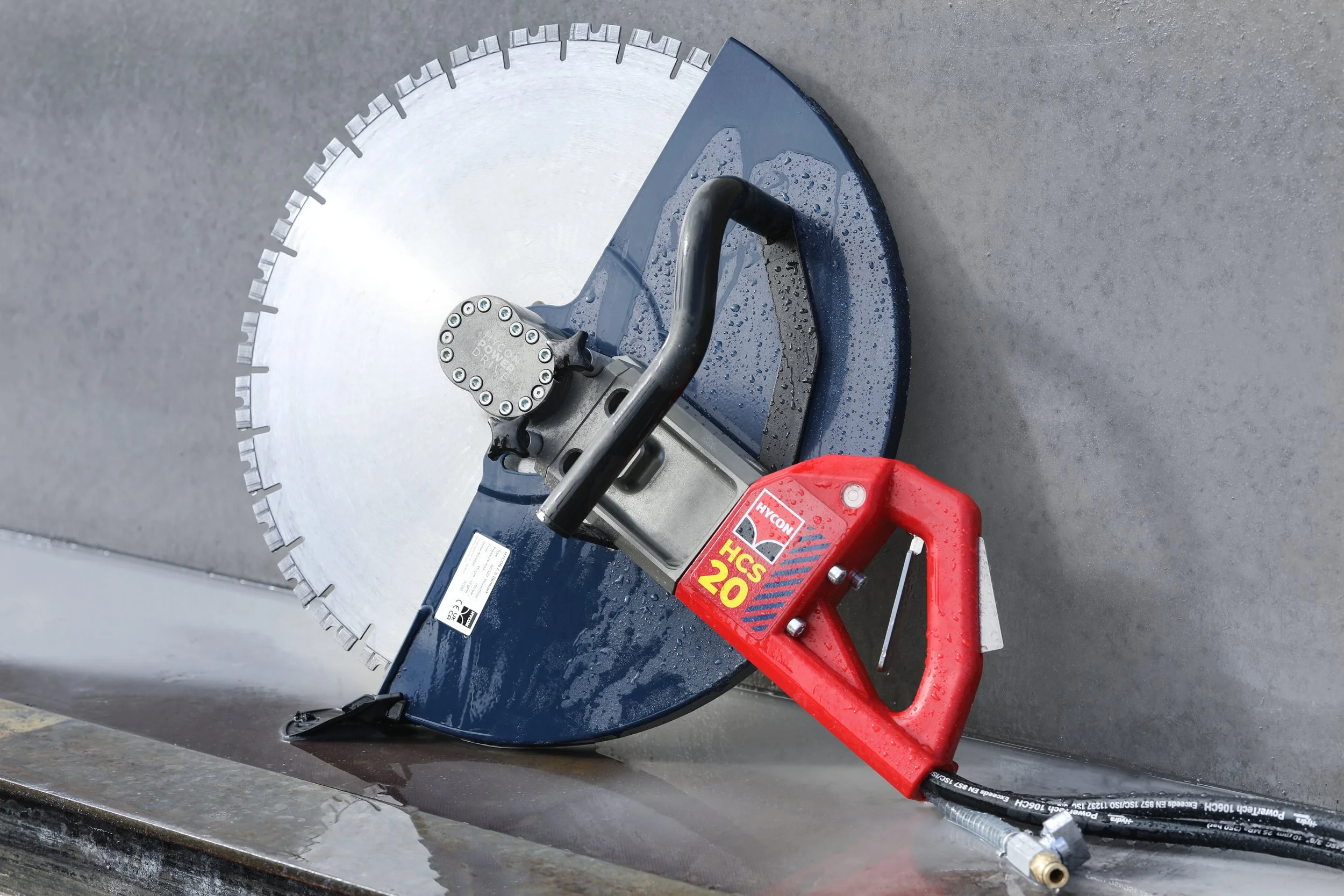
The HYCON Hydraulic Ring Saw has been specifically engineered to provide deep cutting capability while mitigating common reactive forces associated with traditional cut-off saws.
Unlike conventional centre-driven cut-off saws, the ring saw utilises a peripheral drive system. Drive rollers engage the blade at its outer diameter rather than through a central arbor.
This configuration delivers two critical advantages:
Greater Depth of Cut Relative to Blade Diameter
A 16-inch ring saw blade achieves up to 300mm (11.8”) cutting depth.
This allows operators to complete cuts in pipe diameters up to approximately 10 inches from a single cutting position.
Reduced Excavation Requirement
Because the tool does not require rotation around the pipe to complete the cut, clearance excavation is significantly reduced. This minimises trench enlargement and reduces reinstatement effort.
Rotational Energy & Kickback Mitigation
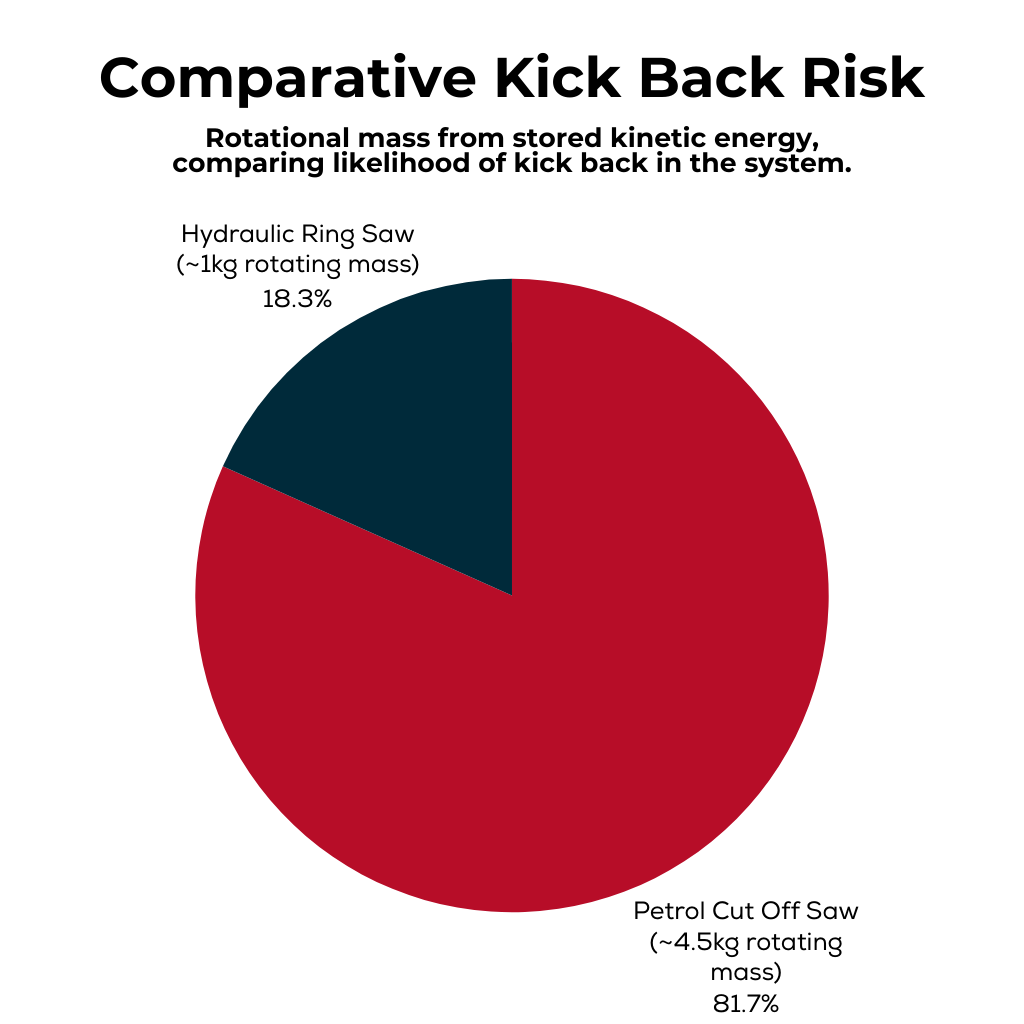
From a mechanical safety perspective, one of the most significant differentiators between hydraulic ring saws and petrol cut-off saws lies in blade mass and rotational inertia. A 16-inch ring saw blade with 300mm cutting depth weighs approximately 1kg. By comparison, a 20-inch petrol cut-off disc delivering only 212mm cutting depth can weigh approximately 4.5kg. The stored rotational energy in a rotating system is directly proportional to its mass and square of its velocity. Reduced blade mass and lower operating RPM in the hydraulic ring saw significantly decrease kinetic energy within the system.
In practical trench cutting scenarios — particularly when cutting below pipe centreline — this translates to:
Reduced severity of kickback events
Lower torque reaction during blade binding
Improved operator control under variable load conditions
Furthermore, the HYCON ring saw incorporates two additional mechanical safeguards:
Peripheral Drive Friction Interface
The drive rollers function analogously to a friction clutch. If the blade binds, controlled slippage occurs rather than instantaneous mechanical lock-up.
Integrated Pressure Relief Valve
In the event of blade jamming, hydraulic flow is automatically bypassed back to tank, preventing sudden re-engagement forces.
This layered approach to reactive force mitigation provides a measurable improvement in operational control compared to petrol-driven systems.
Environmental & Confined Space Considerations
Utility pipe cutting often occurs within trenches that may exceed 1.5m in depth, where natural ventilation is minimal.
Petrol-powered saws place a two-stroke or four-stroke combustion engine directly within the trench environment. Two-stroke engines, in particular, introduce additional particulate and hydrocarbon emissions due to oil-fuel mixture combustion.
Hydraulic systems eliminate this exposure entirely at the cutting location
For water authorities increasingly focused on:
Worker exposure minimisation
Environmental compliance
Emissions reduction
Confined space risk controls
Hydraulic cutting technology provides a structurally superior approach.
Application Scope Within Utility Networks
For pipes up to approximately 10” diameter, the hydraulic ring saw provides optimal balance between:
Cutting capacity
Excavation minimisation
Safety performance
Operator ergonomics
For larger diameters exceeding 10”, the HYCON HPS hydraulic chain saw offers extended reach capability while retaining the same hydraulic safety advantages.
All systems can be powered via:
Standalone hydraulic power packs
Hydraulic outputs from excavators
Shared hydraulic platforms on utility service vehicles
This platform flexibility enables integration into existing utility fleet infrastructure without extensive capital restructuring.
Strategic Implications for NSW Water Authorities
The transition from petrol-powered to hydraulic cutting systems is not merely a tooling upgrade — it represents a broader shift toward safer trench operations and improved compliance positioning.
By progressing approval of HYCON hydraulic systems within NSW state water networks, APG Australia is supporting:
Reduced reactive force exposure
Improved confined space conditions
Lower acoustic and emission impact
Standardised hydraulic platform compatibility
Once authority-level approval is achieved, subcontractor adoption pathways are significantly streamlined, supporting consistent safety standards across tier-one and tier-two contractors.
Hydraulic ring saw technology provides a technically superior alternative to traditional petrol-powered cut-off saws in trench-based utility pipe cutting.
Through reduced rotational mass, remote power source architecture, integrated hydraulic safety systems, and deep cutting capability from a single position, the HYCON Hydraulic Ring Saw aligns with the operational, safety, and environmental priorities of modern Australian utility providers.
For NSW water infrastructure projects, hydraulic cutting represents not only an advancement in performance — but a measurable improvement in trench safety management.
